Clay bar treatment is a process used in car detailing to remove contaminants from a vehicle's paint, glass, and other exterior surfaces. The clay bar is a soft, moldable material made from a resin compound that picks up dirt and particles embedded in the surface that regular washing can't remove.
1. Why Use a Clay Bar?
Over time, your vehicle's exterior becomes exposed to a variety of contaminants. These contaminants bond with the surface and embed themselves into the clear coat, which regular washing cannot fully remove. Examples of contaminants include:
- Tree sap: Sticky substances that adhere to the surface.
- Industrial fallout: Tiny metal particles from railways, factories, or construction that land on your vehicle.
- Brake dust: Iron particles from brakes that can stick to wheels and paint.
- Bug residue: Dead bugs that leave acidic residue on the surface.
- Tar and road grime: Sticky substances picked up while driving on roads, especially freshly paved ones.
Without clay bar treatment, these contaminants can:
- Cause damage to your car’s paint over time.
- Lead to swirl marks and scratches during polishing or waxing.
- Reduce the effectiveness of protective coatings like wax or ceramic coatings.
2. Types of Clay Bars:
Clay bars come in different grades based on how aggressive they are:
- Fine Grade: Ideal for light contamination, such as light dust or pollution.
- Medium Grade: Suitable for moderately contaminated surfaces, often used on cars that have not been detailed in a while.
- Heavy Grade: This is the most aggressive and is used for deeply embedded contaminants like heavy industrial fallout or severe overspray. However, heavy-grade clay may cause marring and often requires polishing afterward to restore a smooth finish.
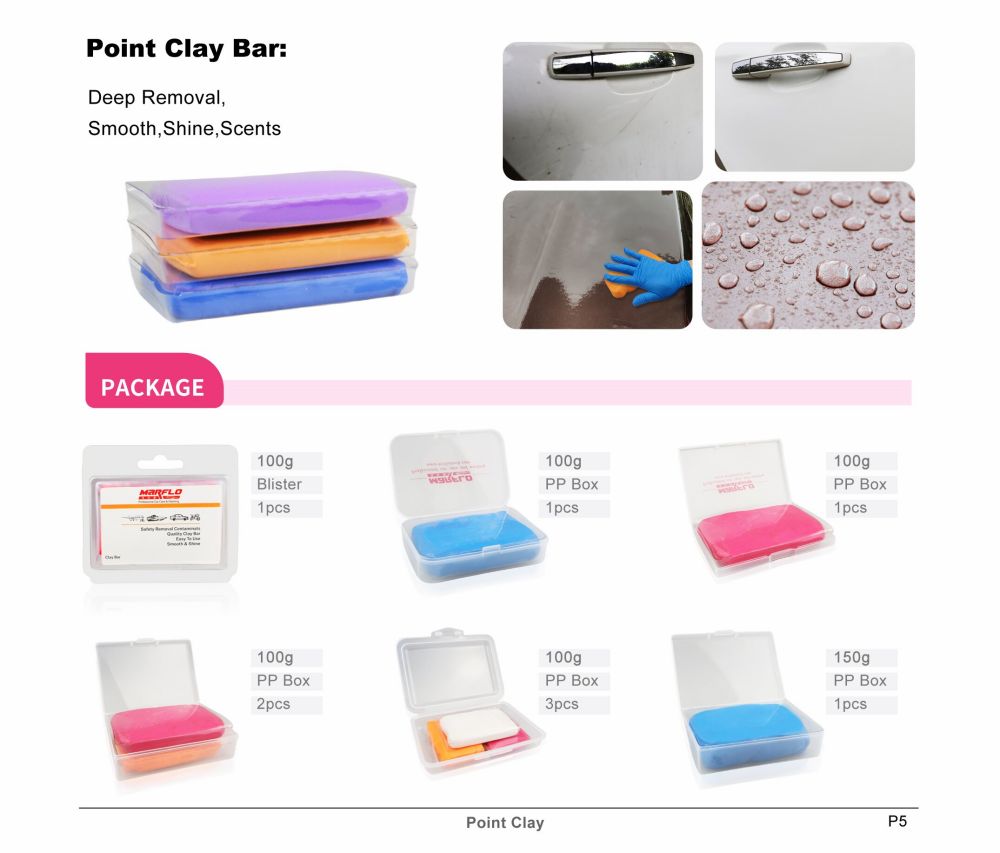
3. Steps in Clay Bar Treatment:
Preparation: First, thoroughly wash and dry the car to remove loose dirt and debris. This prevents the clay from becoming overloaded with dirt.
Lubrication: Before using the clay bar, apply a lubricant to the surface. The lubricant acts as a buffer between the clay and the paint to prevent scratching. A detailing spray or even a mix of water and soap can work.
Claying Process:
-
- Take a small piece of clay (about the size of a golf ball) and flatten it into a small disc.
- Rub the clay gently over a lubricated section of the car’s surface in straight, overlapping motions.
- You’ll feel resistance at first, but as the clay picks up contaminants, the surface will feel smooth.
- Check the clay bar periodically and fold it to expose a clean section as you work. If the clay becomes too dirty, replace it.
Finishing: Once you've finished using the clay, wipe the treated area with a clean microfiber towel to remove any leftover residue from the lubricant.
4. When to Use a Clay Bar:
- Before Polishing or Waxing: It's ideal to clay your car before applying wax, sealant, or polish to ensure that the surface is clean and smooth, allowing for better bonding of protective layers.
- When Contaminants are Noticeable: If you run your hand over the paint after washing and feel rough spots, it's time for clay treatment.
- After Long Periods Without Detailing: For cars that are exposed to harsh environments or have not been detailed in a while, clay bar treatment is a necessary step to rejuvenate the paint.
5. What Happens After a Clay Bar Treatment?
After claying, the surface of the car will be free of contaminants, but the process may leave minor marring or dullness, especially if a more aggressive clay was used. This is normal and can be corrected with:
- Polishing: To remove any light imperfections or swirl marks caused by the clay.
- Waxing or Sealing: To protect the now-clean surface. Applying wax or a paint sealant will lock in the smooth finish and help protect the paint from future contaminants.
6. Important Tips:
- Use Proper Lubrication: Never use a clay bar without lubrication, as this can cause the clay to stick to the paint and create scratches.
- Work in Small Sections: It’s best to work in small areas (about 2x2 feet) at a time, so the lubricant doesn't dry up.
- Inspect Clay Regularly: If the clay becomes too contaminated, fold it to expose a clean section. If the entire bar is dirty, discard it and use a new one.
- Be Gentle: Let the clay bar do the work with light pressure. Pushing too hard can result in scratches or swirl marks.
Summary:
Clay bar treatment is a vital process in car detailing to remove stubborn contaminants and restore smoothness to a vehicle's surface. When done correctly, it enhances the paint's finish and allows for better adhesion of protective waxes or sealants.


