Car detailing involves a thorough cleaning, restoration, and finishing of a vehicle to achieve a showroom-quality appearance. The process is detailed and covers both the interior and exterior of the car. Here are the key steps involved in car detailing:
1. Exterior Detailing:
a. Pre-Wash and Wash:
- Rinse:Start by rinsing the car with water to remove loose dirt and debris.
- Foam Cannon/Pre-Wash:Apply a layer of foaming pre-wash or snow foam to loosen dirt without scrubbing, reducing the risk of scratches.
- Two-Bucket Method:Wash the car using the two-bucket method—one bucket for soapy water and another for rinsing the wash mitt. This helps prevent dirt from scratching the paint.
b. Wheel and Tire Cleaning:
- Wheel Cleaning:Clean the wheels and tires using dedicated wheel cleaner and brushes. Focus on removing brake dust, grime, and dirt from the wheel wells and tires.
- Tire Dressing:Apply tire dressing to enhance the appearance and protect against UV damage.
c. Decontamination:
- Clay Bar Treatment:Use a clay bar to remove bonded contaminants like tar, tree sap, and industrial fallout from the paint surface, leaving it smooth.
- Iron Remover (Optional):Apply an iron remover to dissolve iron particles that have embedded into the paint.
d. Polishing:
- Paint Correction:Polish the paint to remove minor scratches, swirl marks, and oxidation. Depending on the condition of the paint, this may involve a single-stage or multi-stage polishing process.
e. Protection:
- Waxing or Sealing:Apply a wax, sealant, or ceramic coating to protect the paint from UV rays, dirt, and moisture. This also enhances the shine and depth of the color.
- Trim Restoration:Clean and restore any plastic or rubber trim with specialized products to prevent fading and cracking.
f. Glass and Mirror Cleaning:
- Glass Cleaning:Clean all exterior glass, including windows and mirrors, to remove smudges, water spots, and streaks. Use a glass cleaner that doesn’t leave residues.
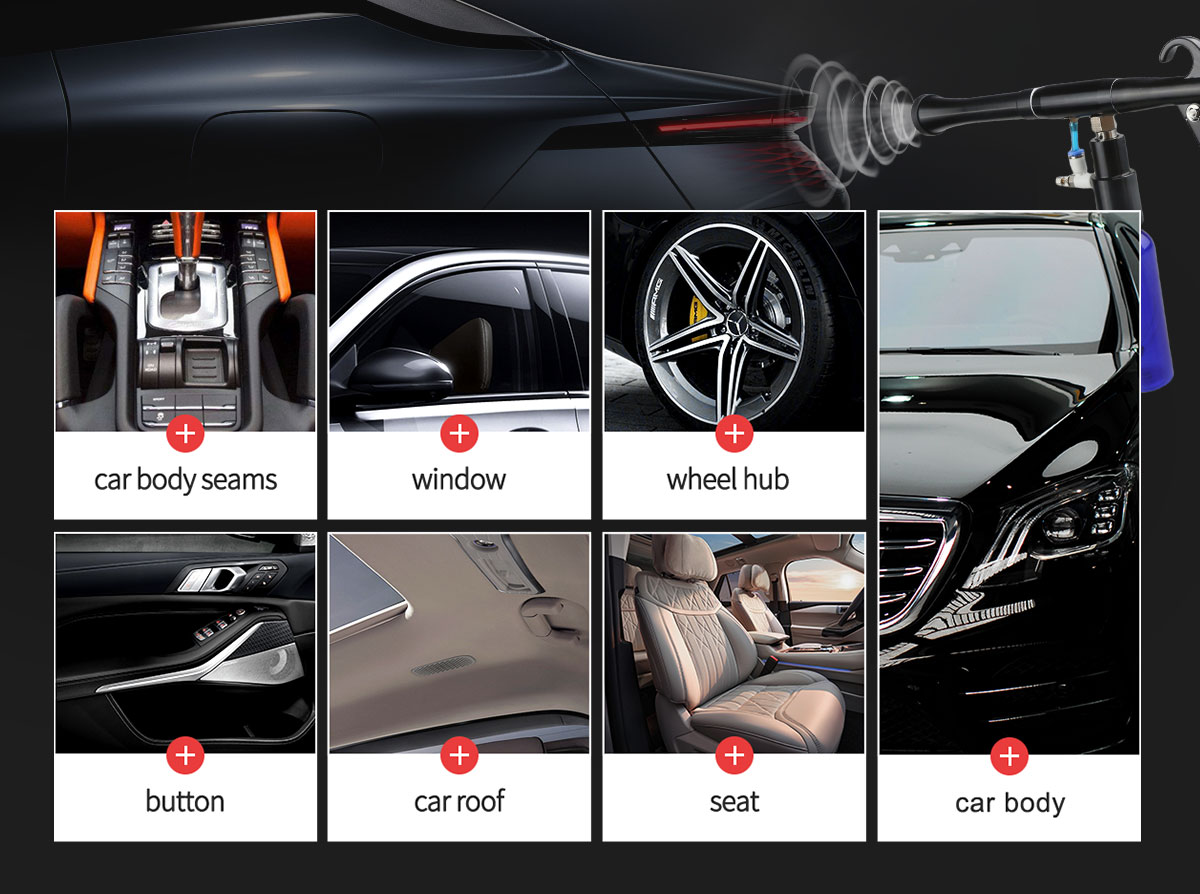
2. Interior Detailing:
a. Vacuuming:
- Thorough Vacuum:Vacuum the entire interior, including seats, carpets, floor mats, and the trunk, to remove dust, dirt, and debris.
b. Upholstery and Carpet Cleaning:
- Steam Cleaning/Shampooing:Use steam cleaners or carpet shampoo to deep clean fabric upholstery, carpets, and mats. For leather seats, use a leather cleaner and conditioner to maintain softness and prevent cracking.
c. Dashboard, Console, and Door Panels:
- Cleaning:Clean all hard surfaces, including the dashboard, center console, door panels, and steering wheel, with appropriate cleaners.
- Protection:Apply a UV protectant to prevent fading and cracking of plastic, vinyl, or leather surfaces.
d. Air Vent Cleaning:
- Compressed Air or Brushes:Clean air vents using compressed air or detailing brushes to remove dust and dirt buildup.
e. Odor Removal:
- Deodorizing:Use an odor eliminator or air freshener to remove any unpleasant smells from the interior. This may include an ozone treatment for stubborn odors.
f. Interior Glass Cleaning:
- Clean Windows and Mirrors:Use a streak-free glass cleaner to clean all interior windows, mirrors, and screens.
3. Optional Steps:
a. Engine Bay Cleaning:
- Degreasing:Clean the engine bay using a degreaser to remove oil, dirt, and grime.
- Detailing:Dress plastic and rubber components to enhance their appearance and protect them from the elements.
b. Paint Protection Film (PPF) or Ceramic Coating:
- PPF/Ceramic Coating Application:Apply these advanced protective coatings to protect the paint from scratches, rock chips, and environmental damage.
4. Final Inspection:
- Quality Check:Conduct a final inspection to ensure all areas are clean and properly protected. Make any necessary touch-ups.
- Finishing Touches:Add final touches like cleaning the exhaust tips, applying final detail spray, or polishing chrome accents.
By following these key steps, car detailing ensures that your vehicle is thoroughly cleaned, protected, and restored to a near-new condition, both inside and out.


