
Content Menu
Understanding How to Clay Bar a Car
● Tools and Materials Needed for Claying Your Car
● Step-by-Step Guide: How to Clay Bar a Car
>> 3. Apply Lubricant to the Paint
>> 7. Wash the Car Again (Optional)
● Frequently Asked Questions (FAQs)
When it comes to maintaining your car's exterior, there are numerous techniques and products available to keep your vehicle looking pristine. One essential method that many car enthusiasts swear by is using a clay bar. Although it may seem like an advanced process, using a clay bar is a straightforward technique that can significantly improve the appearance of your vehicle's paint. In this article, we'll dive into what a clay bar is, how it works, the benefits of using it, and step-by-step instructions on how to clay bar your car.
A clay bar is a detailing tool made of a soft, pliable resin compound that is designed to remove contaminants from your vehicle's paint surface. These contaminants include dirt, tar, industrial fallout, tree sap, and even brake dust that has bonded to the paint over time. While washing your car will remove the bulk of dirt, it’s the clay bar that’s needed to eliminate the microscopic particles embedded in the paint, leaving a smooth, clean surface.
The process of "claying" involves gently gliding the bar over the surface of your car to pick up these contaminants. It’s essential for preparing the vehicle for waxing or sealing because a clean, smooth surface allows the protective layers to bond better to the paint.
1.Improved Paint Finish: When contaminants are removed, the surface of the car becomes smooth, restoring the original shine of the paint. The process also eliminates any roughness, making your car feel silky to the touch.
2.Enhanced Paint Protection: By eliminating debris that could otherwise lead to scratches or degrade the quality of wax or sealants, claying prepares the surface for better adhesion of protective coatings.
3.Increased Longevity of Car Detailing: If you regularly clay bar your vehicle, you’ll keep your car looking better for longer. The removal of contaminants prevents them from damaging the paint, ensuring a longer lifespan for your car’s finish.
4.Dealing with Overspray: One of the most common reasons for using a clay bar is to remove paint overspray. Whether your car was parked near a construction site or you’ve had it resprayed, the clay bar can remove even stubborn paint particles left on your car.
Before you start the claying process, it’s essential to gather the necessary tools. Here’s a quick checklist:
Start by giving your car a complete wash. Use a high-quality car shampoo and a microfiber mitt to remove loose dirt and grime from the surface. It’s crucial to clean your car well before claying it, as you don’t want to rub any large debris into the paint, which could cause scratches.
After washing, rinse the car thoroughly and dry it with a clean microfiber towel. You want the car’s surface to be as clean as possible before you begin claying.
Take the clay bar out of its packaging and knead it in your hands to soften it. You should mold it into a flat, palm-sized shape, which allows you to work with it more effectively. If the clay bar is too large, you can cut it into smaller sections. The bar will pick up contaminants, so it’s important to knead it frequently to expose a clean surface.
If the clay bar feels too hard or sticky, you can moisten it with a bit of lubricant to soften it.
Spray a generous amount of lubricant on a small section of the car's paint. Typically, you should work in a 2x2-foot area at a time. The lubricant serves as a barrier between the clay bar and the paint, preventing it from dragging or scratching the surface. It also helps the clay bar glide smoothly over the paint.
Now comes the fun part—claying the car! Gently glide the clay bar over the lubricated section of the paint using a back-and-forth motion. You don’t need to press hard; let the clay bar do the work. It should feel smooth, with little resistance. If the clay bar catches or feels rough, it's an indication that there are contaminants embedded in the surface, and it’s working to remove them.
After a few passes, you’ll feel the surface become smoother as the contaminants are lifted off. Occasionally, knead the clay bar to expose a clean section and continue working.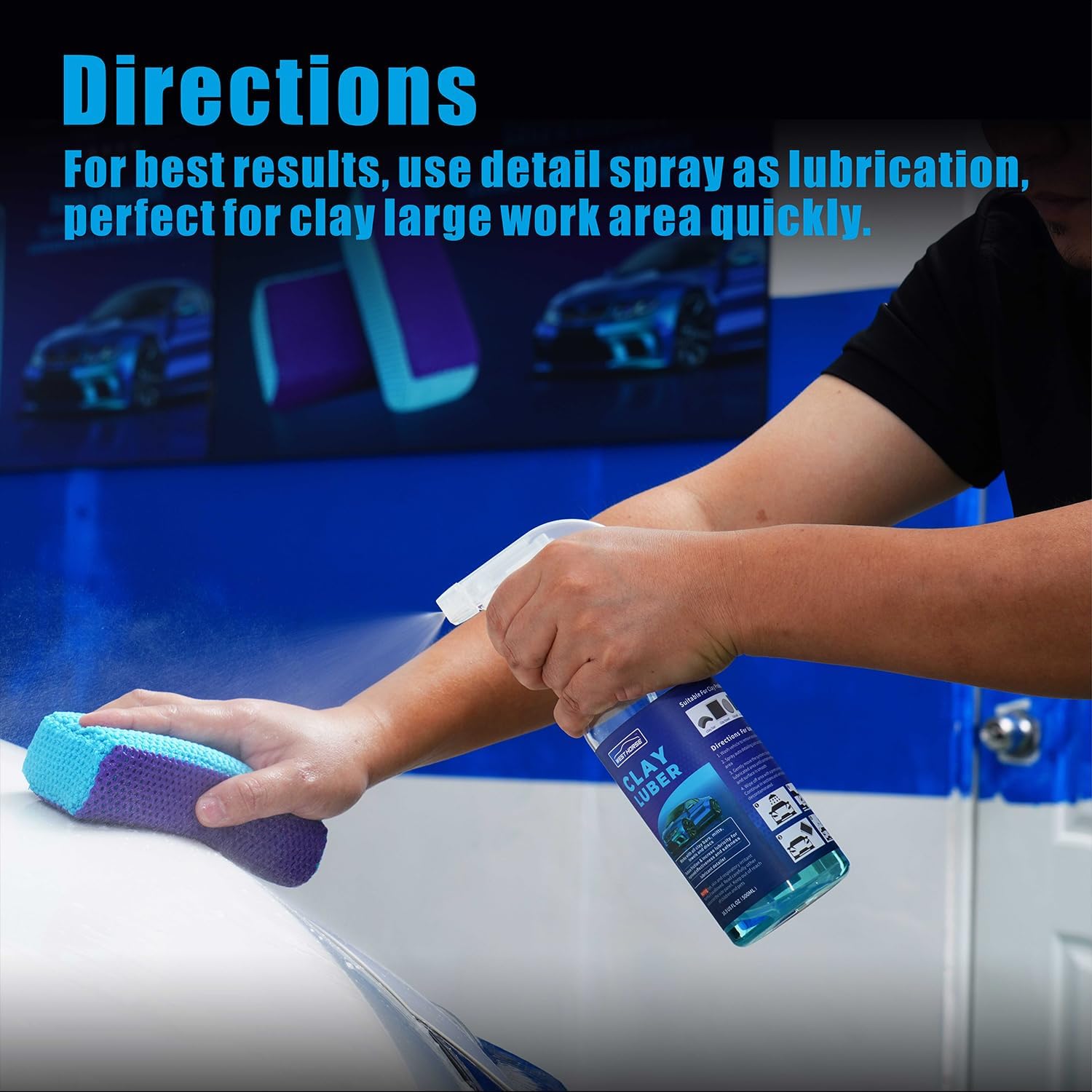
Once you’ve gone over the section with the clay bar, use a microfiber towel to wipe off the excess lubricant. This will reveal the smooth, clean surface underneath. Repeat this process, moving to the next section of the car, until you’ve clayed the entire vehicle.
After you’ve clayed the entire car, inspect the paint to ensure that it feels completely smooth. Run your hand across the surface, and you should feel no roughness or contamination. If any rough spots remain, you can go over those areas again with the clay bar.
While not always necessary, it’s a good idea to rinse and wash your car once more after claying to remove any remaining lubricant and clay dust. Dry the car thoroughly with a microfiber towel.
After claying, it’s crucial to apply a protective coat of wax, sealant, or ceramic coating. The clay bar removes any contaminants, leaving a perfectly smooth surface for these products to bond to. Applying a protective layer will help keep your car looking good and protect the paint from environmental damage.
Claying your car is an essential step in car care and detailing. It not only removes contaminants that regular washing can't handle, but it also restores the smoothness and gloss of your vehicle’s paint. By following the steps outlined above, you can easily perform this process at home and keep your car’s paint looking fresh and protected.
1.How often should I clay bar my car?
Generally, claying should be done two to three times a year, depending on the environmental conditions and how much exposure your car has to contaminants.
2.Can I clay bar my car if it has ceramic coating?
Yes, you can still use a clay bar on a ceramic-coated car. Just be careful not to damage the coating by applying too much pressure or using an aggressive clay bar.
3.Can I use any type of clay bar on my car?
It’s recommended to use a fine-grade clay bar for most vehicles. For heavily contaminated paint, you may need a medium or aggressive grade, but be cautious as these can be abrasive.
4.What should I do if I drop the clay bar?If the clay bar falls on the ground, inspect it carefully. If it's covered in dirt or debris, discard it or rinse it thoroughly before continuing. Don’t risk rubbing dirt into the paint.
5.Is claying necessary before applying wax or sealant?
Yes, claying removes contaminants that could prevent wax or sealant from bonding properly. A smooth, clean surface ensures better adhesion of protective products.


