
Content Menu
The Importance of Using a Clay Bar on Your Car Paint
● Why Should You Use a Clay Bar?
● Step-by-Step Guide to Using a Clay Bar
● Common Mistakes to Avoid When Using a Clay Bar
When it comes to maintaining the appearance and longevity of your car's paint, few methods are as effective as using a clay bar. This simple yet powerful tool can make a world of difference in how your vehicle looks and how long its paint remains pristine. In this article, we will explore the benefits of using a clay bar, how it works, and why it should be a regular part of your car care routine.
A clay bar is a detailing tool made from a special type of synthetic clay that is designed to remove contaminants from a car's paint surface. These contaminants can be anything from tree sap, industrial fallout, rail dust, to other stubborn pollutants that adhere to the paint and cannot be removed by regular washing.
Clay bars come in different grades, ranging from mild to aggressive, depending on the level of contamination they are designed to handle. The mild clay bars are usually used for cars that are lightly contaminated, while aggressive clay bars are used for cars with heavy buildup.
While regular washing and waxing can keep your car looking good, they are not sufficient to remove all contaminants that settle on your car's paint. Over time, these contaminants build up, leading to a rough texture on your car’s surface. This roughness can dull the paint, affect the finish, and even lead to premature wear and tear.
Here are a few reasons why using a clay bar is essential for your car:
1.Restores Smoothness
The primary benefit of using a clay bar is that it restores the smoothness of your car's paint. After claying, the surface will feel as smooth as glass, as the clay bar removes embedded dirt and pollutants.
2.Enhances Paint Gloss
By removing the bonded contaminants, the clay bar allows your car's paint to reflect light more evenly, resulting in a deeper, more vibrant shine. Wax or sealant will also bond better to the clean surface, leading to a longer-lasting finish.
3.Prevents Paint Damage
Contaminants that remain on the surface of your car can cause damage over time. Some particles, like rail dust, contain metallic elements that can rust if left untreated. The clay bar ensures that these harmful particles are removed before they have the chance to cause any lasting damage.
4.Improves the Effectiveness of Waxing
Clay barring your car ensures that the wax or sealant you apply afterward will bond properly to the paint, giving you longer-lasting protection. A smooth, clean surface allows for better product adhesion, making your wax or sealant application more effective and durable.
5.Prepares the Car for Polishing
If you’re planning to polish your car, it’s essential to remove contaminants first. If these particles are not removed, the polishing process may push them deeper into the paint, potentially causing swirl marks or scratches.
6.Saves Time and Money in the Long Run
Regularly claying your car will save you time and money in the long run by reducing the need for expensive paint repairs or professional detailing services. It helps to maintain the integrity of your car’s paint and keeps it looking new for longer.
A clay bar works through a process known as mechanical abrasion. As you rub the clay bar over the surface of the car, it picks up dirt and contaminants from the paint, trapping them within its pliable structure. The clay bar doesn’t scratch the paint because the contaminants are not abrasive enough to damage the clear coat, and the smoothness of the clay helps it glide over the paint.
When you use a clay bar, you’ll also need a lubricant, usually a clay lubricant or a quick detailer spray. The lubricant helps the clay bar glide smoothly across the surface, preventing any friction that could lead to scratches. It also ensures that the contaminants are effectively lifted off the paint and held within the clay.
Using a clay bar is a straightforward process, but it requires a bit of patience and attention to detail. Here’s a step-by-step guide to help you get the most out of your clay bar treatment:
1.Wash Your Car
Before using the clay bar, wash your car thoroughly with a quality car shampoo. This removes the bulk of the dirt and grime, ensuring that the clay bar doesn’t pick up large particles that could scratch the paint.
2.Dry the Car
After washing, dry your car completely with a microfiber towel. The surface should be completely dry before you begin using the clay bar.
3.Prepare the Lubricant
Spray the lubricant generously onto a small section of your car's paint. It’s important to work in small sections to ensure that the lubricant does not dry out before you can use it.
4.Use the Clay Bar
Take a small piece of the clay bar (about the size of a walnut) and gently rub it back and forth over the lubricated surface. Apply light pressure, but let the clay do the work. You should feel the clay grab the surface at first but notice that it becomes smoother as it picks up contaminants.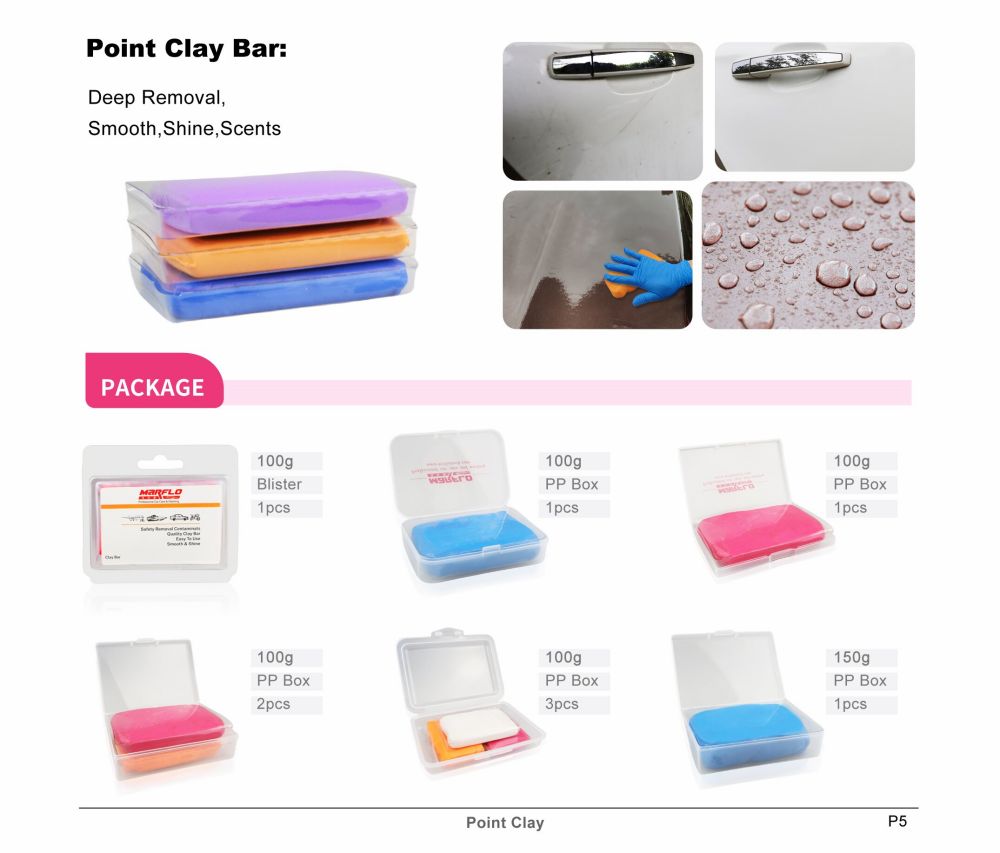
5.Inspect the Paint
After claying a section, wipe off any excess lubricant with a clean microfiber towel. Inspect the paint to check for smoothness. You should feel a noticeable difference in texture. If it still feels rough, repeat the process.
6.Repeat the Process
Continue this process across the entire car, working in small sections. Keep the surface lubricated, and don’t rush through the job. The more thorough you are, the better the results.
7.Wax or Seal the Paint
Once the entire car has been clayed, you’ll notice a smooth, clean surface. At this point, it’s a good idea to apply a layer of wax or sealant to protect the paint and enhance the shine. This step is crucial for maintaining the clean surface you’ve just achieved.
Claying your car isn’t a daily or weekly task. It's generally recommended to clay your car once or twice a year, depending on the environment your vehicle is exposed to. If you drive in areas with high pollution, near industrial zones, or in places with lots of tree sap or bird droppings, you might want to clay your car more frequently.
In general, claying should be done when your car's paint feels rough or you notice visible contaminants on the surface. You can also use the "plastic bag test" to check the surface. Simply place your hand inside a plastic bag and run it over the paint. If you feel bumps, it's time to clay.
While using a clay bar is relatively simple, there are a few common mistakes that people often make:
1.Not Using Enough Lubricant
Lubrication is crucial for the clay bar to work properly. Using too little lubricant can cause the clay bar to drag, which can lead to scratches on the paint.
2.Claying on a Dirty Surface
Always wash your car before claying. If you use the clay bar on a dirty surface, you risk pushing the dirt into the paint, which can cause scratches or swirl marks.
3.Not Checking the Paint Frequently
Be sure to check the paint after each section to ensure that the surface feels smooth. If the roughness persists, keep claying that section until it’s fully decontaminated.
4.Using a Clay Bar on Damaged Paint
If your car’s paint is already damaged, claying may make the problem worse. Ensure that your paint is in good condition before using a clay bar, or consult a professional for advice.
5.Using Old or Contaminated Clay
If your clay bar gets too dirty or starts to crumble, it’s time to replace it. Using a damaged or contaminated clay bar can cause more harm than good.
The use of a clay bar is an essential part of maintaining your car's appearance. It not only helps to restore the smoothness and gloss of your paint but also prevents damage from embedded contaminants. By incorporating clay bar treatments into your regular car care routine, you can ensure that your vehicle stays looking new for years to come.
1.How often should I use a clay bar on my car? It is typically recommended to use a clay bar once or twice a year, but it may depend on the level of contamination in your area.
2.Can I use a clay bar on other parts of my car? Yes, a clay bar can be used on glass, wheels, and even some plastic trim. However, be cautious when using it on sensitive areas.
3.Is it necessary to use a clay bar before waxing? While not strictly necessary, using a clay bar before waxing is highly recommended for the best results and long-lasting protection.
4.Can I reuse a clay bar? Yes, you can reuse a clay bar as long as it remains clean. If it becomes too dirty or starts to crumble, it should be replaced.
5.What should I do if I drop my clay bar? If you drop your clay bar, inspect it for dirt or debris. If it's clean, you can continue using it. However, if it picks up contaminants from the ground, it’s better to discard it to avoid scratching your car's paint.


