Clay barring is an effective way to decontaminate your car's paint by removing embedded contaminants that washing alone can't remove, such as industrial fallout, tree sap, road tar, and brake dust. Here's a step-by-step guide on how to clay bar your car properly:
What You'll Need:
- Clay bar kit (includes clay bar and clay lubricant or detailing spray)
- Microfiber towels
- Car wash supplies (bucket, car shampoo, wash mitt, etc.)
Step-by-Step Guide:
1. Wash Your Car Thoroughly
- Why:Before using a clay bar, ensure the surface is clean to avoid scratching the paint with dirt and debris.
- How:Wash the car with car shampoo and a wash mitt, then rinse and dry it thoroughly with microfiber towels.
2. Break the Clay Bar into Smaller Pieces
- Why:Use only a small section of the clay at a time. This ensures you don't waste the entire bar if it becomes too contaminated.
- How:Take the clay bar and break off a small chunk, kneading it into a flat, disc-like shape.
3. Lubricate the Surface
- Why:Proper lubrication is essential to avoid damaging the paint. The clay bar should glide smoothly over the surface.
- How:Spray a liberal amount of clay lubricant or detailing spray on a small section of the car's surface (e.g., a 2x2-foot area).
4. Glide the Clay Bar Over the Paint
- Why:The clay bar will pick up contaminants as it glides over the surface.
- How:Gently move the clay bar back and forth over the lubricated area. Do not press hard; light pressure is sufficient. You'll feel the clay picking up contaminants—once the surface feels smooth, the job is done for that section.
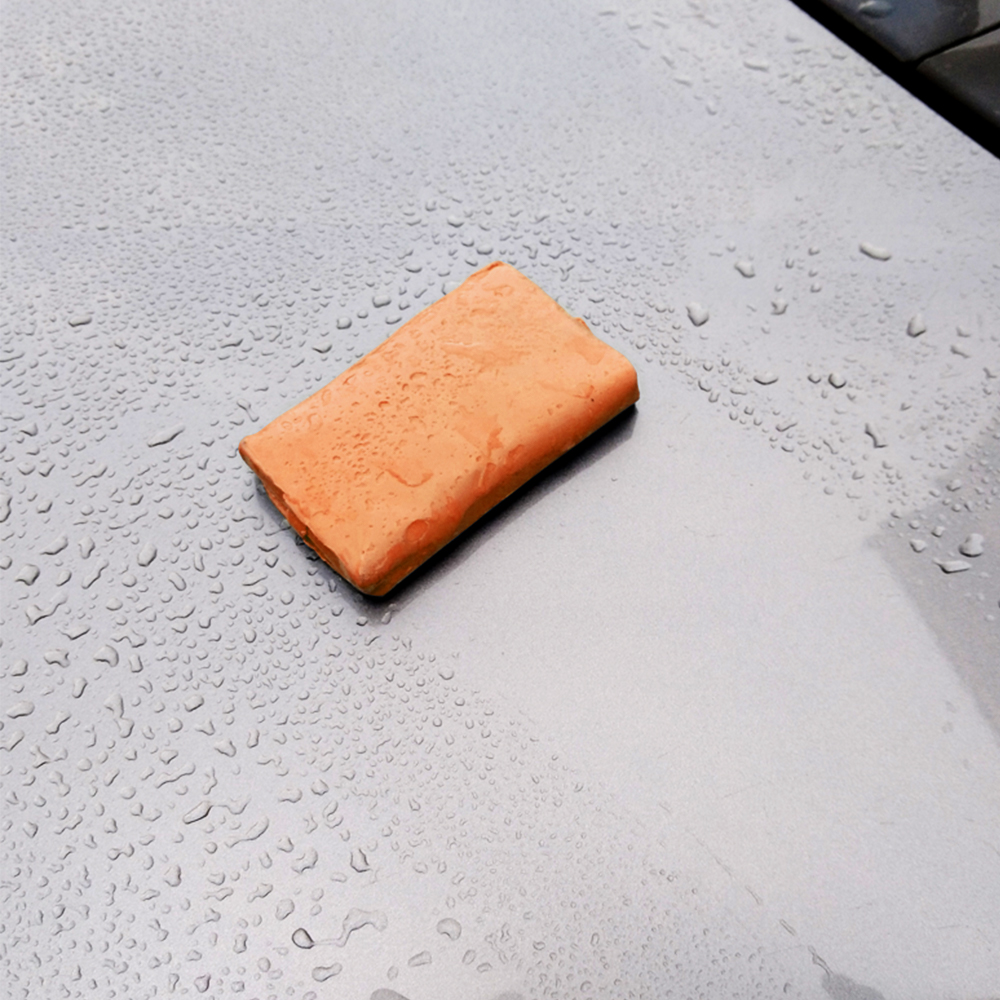
5. Check the Clay for Contaminants
- Why:You don’t want to drag dirt across your paint, as this can cause scratches.
- How:After a few passes, inspect the clay bar. If you see dirt, fold the clay to reveal a clean section, then continue. If the entire piece becomes dirty, discard it and use a new one.
6. Wipe the Area Clean
- Why:Removing any excess lubricant and residue is important to ensure a smooth finish.
- How:Use a clean microfiber towel to wipe away the remaining lubricant and inspect the surface.
7. Repeat the Process
- Why:To cover the entire car and remove all contaminants.
- How:Continue the process, working in small sections until the entire car is clay-barred.
8. Polish and Protect the Paint
- Why:Claying can remove some of the protective wax layer, so it’s important to follow up with protection.
- How:After claying, apply a layer of car wax, sealant, or polish to protect the paint and restore its shine.
Tips:
- Avoid using the clay bar if it falls on the ground—it will pick up grit that could scratch your paint.
- Only use clay on cool surfaces, not hot paint or direct sunlight, as this can cause the lubricant to dry too quickly.
By following these steps, you’ll successfully decontaminate your car’s paint and prepare it for further detailing or protection.


