Home > Blog > Testing or Using > Clay Pad vs Clay Bar: Why the Clay Pad is Revolutionizing Detailing
Clay Pad vs Clay Bar: Why the Clay Pad is Revolutionizing Detailing
By Brillia-LuluJune 24th, 2025
Clay Pad vs Clay Bar: Why the Clay Pad is Revolutionizing Detailing
The automotive detailing industry is constantly evolving, and clay padhave emerged as a game-changing alternative to traditional clay bars. While both serve the same fundamental purpose—removing bonded contaminants like overspray, brake dust, and industrial fallout—clay pads offer superior efficiency, consistency, and ease of use, making them a favorite among professionals and enthusiasts alike.
Why Clay Pads Outperform Clay Bars
1. Machine-Assisted Efficiency
Clay bars require manual kneading, folding, and hand application, which is time-consuming and inconsistent.
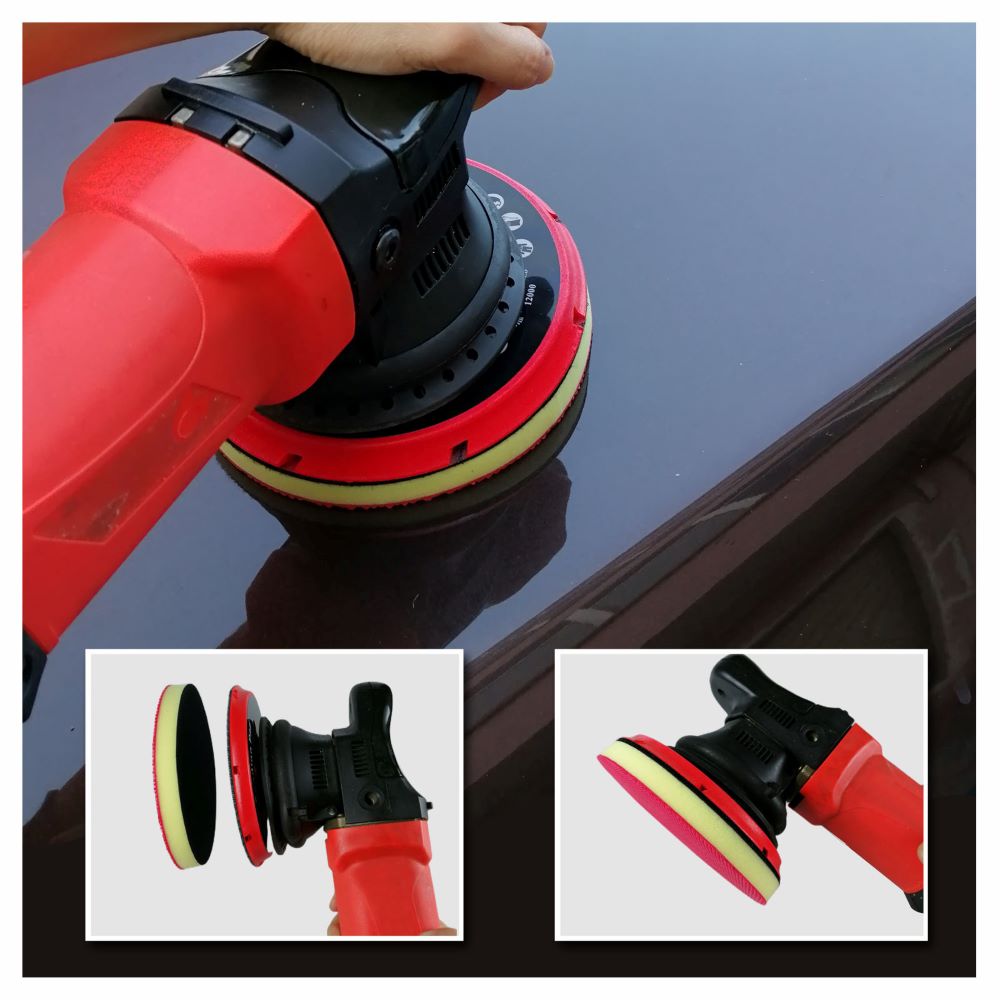
Clay pads attach to a DA polisher or rotary machine, enabling 70% faster decontamination with uniform pressure distribution.
2. Larger Surface Coverage
Clay bars are best for small sections, requiring frequent reshaping.
Clay pads cover wide panels (hoods, doors, roofs) in one pass, reducing detailing time significantly.
3. Consistent Results with Less Risk of Marring
Hand-applied clay bars can introduce swirls if not lubricated properly.
Machine-guided clay pads glide smoothly with even pressure, minimizing surface defects.
4. Reusable & Durable
Clay bars degrade, crack, and pick up debris, forcing frequent replacement.
Clay pads are washable and reusable, lasting multiple sessions with proper care.
5. Ideal for Pre-Polishing & Coating Prep
The uniform cleaning action of clay pads leaves surfaces smoother, reducing the need for heavy polishing before ceramic coatings or wax applications.
How Brilliatech's Clay Pad Works: The 3-Layer Technology
Brilliatech's advanced clay pad is engineered for optimal performance with a three-layer construction:
Sponge Layer (3-5mm) – Provides shock absorption, water retention, and cooling during operation.
Clay Surface Layer – Synthetic clay compound that actively lifts contaminants without scratching.
This design allows for faster, safer, and more effective decontamination compared to traditional methods.
Who Should Use a Clay Pad?
✔ Professional detailers – Saves time on large jobs (dealerships, fleets, high-end detailing). ✔ Enthusiasts & DIYers – Easier to use than traditional clay, with less risk of mistakes. ✔ Ceramic coating installers – Ensures flawless surface prep before application.
Brilliatech: The Global Leader in Clay Technology
As a top-tier manufacturer, Brilliatech supplies OEM/ODM clay products (clay bars, pads, mitts, blocks) to brands, distributors, and e-commerce platforms worldwide.