
Clay bar detailing is a key process in automotive care designed to remove contaminants from the surface of a vehicle’s paint. This process helps achieve a smooth, clean finish and is often a precursor to other detailing steps like polishing and waxing. Here’s an in-depth look at what clay bar detailing is and how it works:
Clay bar detailing involves using a clay bar (or clay mitt) to remove embedded contaminants that regular washing can’t eliminate. The clay bar is a soft, pliable material that physically pulls out particles stuck to the surface of the vehicle’s paint, glass, or metal.
1.Surface Contaminants:
Types of Contaminants: Over time, a vehicle’s surface can become contaminated with various pollutants like brake dust, industrial fallout, tree sap, tar, and environmental pollutants. These contaminants adhere to the paint and become embedded in it.
Challenges: Regular washing or waxing does not remove these contaminants because they are embedded in the surface and not just sitting on top.
2.Clay Bar Composition:
Material: Clay bars are made from a clay-like substance that is formulated to be slightly abrasive but gentle enough not to damage the paint when used properly.
Function: As the clay bar is rubbed over the surface, it picks up and traps these contaminants, pulling them out of the paint.
3.Lubrication:
Purpose: To prevent the clay bar from sticking to the paint or causing scratches, a lubricant (often a dedicated clay bar lubricant or a diluted car wash soap solution) is applied to the surface.
Application: The lubricant creates a slick surface that allows the clay bar to glide smoothly, reducing friction and potential damage.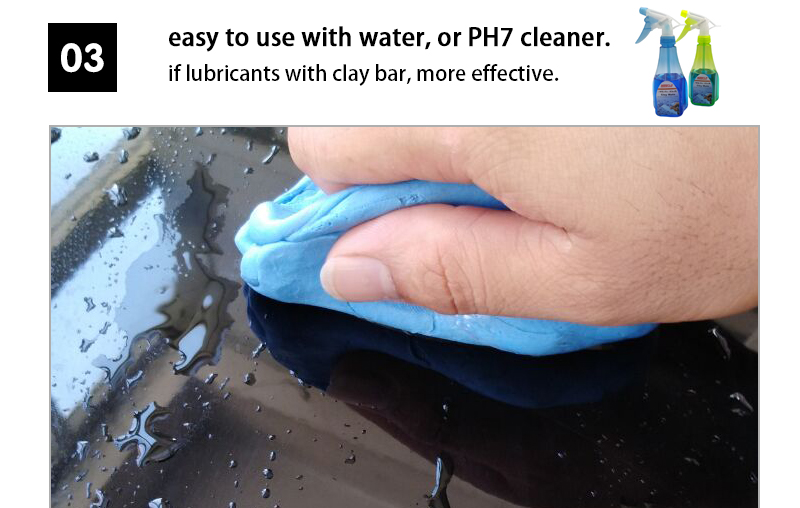
1.Preparation:
Wash the Vehicle: Begin by washing the vehicle to remove loose dirt and debris. This prevents larger particles from causing scratches during the claying process.
Dry the Vehicle: Ensure the car is completely dry before starting the clay bar process.
2.Applying Lubricant:
Spray Generously: Apply the clay lubricant or soap solution to a small section of the vehicle. The lubricant should cover the area generously to ensure smooth gliding.
3.Using the Clay Bar:
Rub Gently: Take a piece of the clay bar and flatten it into a manageable shape. Rub the clay bar gently over the lubricated surface in a back-and-forth motion. The clay bar will initially feel rough but will become smoother as it picks up contaminants.
Check for Smoothness: Periodically wipe the area with a clean microfiber towel to check for smoothness and ensure that all contaminants have been removed
4.Wipe Down:
Remove Residue: After claying each section, wipe the surface with a clean microfiber towel to remove any lubricant and clay residue.
5.Post-Claying Care:
Rewash if Needed: After claying the entire vehicle, it may be beneficial to give the car a final wash to remove any remaining lubricant or debris.
Apply Polish or Wax: Proceed with polishing, waxing, or sealing to protect the newly cleaned surface and enhance its appearance.
1.Improved Paint Smoothness:
Texture: Removes roughness caused by contaminants, resulting in a smoother surface that feels like glass.
2.Enhanced Gloss and Shine:
Visual Appeal: The removal of contaminants allows for better light reflection, enhancing the overall shine of the paint.
3.Preparation for Polishing/Waxing:
Better Results: A clean surface ensures that polishing compounds, waxes, and sealants can adhere properly and work more effectively.
4.Prevents Paint Damage:
Surface Integrity: By removing contaminants that can cause corrosion or oxidation, clay bar detailing helps maintain the paint’s condition over time.
Clay bar detailing is an essential step in maintaining a vehicle’s appearance and ensuring that subsequent detailing treatments yield the best results.