Content Menu
Clay Bar Detailer Sprays: The Ultimate Solution for a Smooth and Clean Car Surface
● What Is a Clay Bar Detailer Spray?
● How Do Clay Bar Detailer Sprays Work?
● Why Use a Clay Bar Detailer Spray?
>> 1. Prevents Scratching and Swirl Marks
>> 2. Improves Paint Smoothness
>> 3. Increases Detailing Efficiency
>> 5. Can Be Used as a Quick Detailer
● How to Use Clay Bar Detailer Sprays
● Types of Clay Bar Detailer Sprays
● Choosing the Right Clay Bar Detailer Spray
● Frequently Asked Questions (FAQs)
When it comes to car detailing, achieving a flawless, mirror-like finish is the ultimate goal for many car enthusiasts. Among the various products available for maintaining a car’s pristine condition, one tool stands out: the clay bar. However, in order to maximize the efficiency and convenience of using a clay bar, many car owners and detailers rely on a special product known as the clay bar detailer spray. This spray has become an essential part of the car detailing arsenal, offering a faster, more effective method of removing contaminants from the car’s surface without causing harm. In this article, we will delve into the importance of clay bar detailer sprays, how they work, and why they are indispensable for maintaining a smooth, glossy car finish.
A clay bar detailer spray is a lubricant or a cleaning solution designed to facilitate the use of a clay bar. A clay bar itself is a soft, malleable substance that is used to remove contaminants like dirt, road grime, tree sap, industrial fallout, and other microscopic particles from the car’s paint. These contaminants are too small to be removed by regular washing, and if left untreated, they can lead to a rough, uneven surface and even permanent damage over time.
When using a clay bar, it’s essential to provide a slippery surface for the clay to glide over, preventing it from sticking to the paint and causing scratches. This is where the clay bar detailer spray comes in. It provides a slick and smooth surface, ensuring that the clay bar moves effortlessly across the paint, lifting and trapping contaminants in the process.
The primary function of a clay bar detailer spray is to serve as a lubricant and cleaning solution. Here’s a breakdown of how the spray works:
1.Lubrication: The detailer spray creates a slippery layer on the car’s surface, reducing friction between the clay bar and the paint. This prevents the clay from bonding to the surface, which could cause scratches or swirl marks. With adequate lubrication, the clay bar can glide smoothly, ensuring that it picks up contaminants without harming the paint.
2.Cleaning Action: Most clay bar detailer sprays are formulated with ingredients that also aid in cleaning. These sprays can break down and lift contaminants from the surface, making it easier for the clay bar to remove them. The cleaner the surface, the better the clay bar can do its job.
3.Surface Protection: Some high-quality clay bar detailer sprays also offer a degree of surface protection, such as leaving behind a thin layer of wax or sealant that helps enhance the car’s finish and offers some protection against future contaminants.
The benefits of using a clay bar detailer spray are numerous, and they play a significant role in ensuring the best possible results when performing a clay bar treatment on a car.
Without the right lubrication, a clay bar can stick to the paint, causing friction. This can lead to scratches, swirl marks, or marring on the surface. The use of a clay bar detailer spray eliminates this risk by creating a lubricated barrier that allows the clay bar to glide across the surface smoothly.
The ultimate goal of using a clay bar is to remove embedded contaminants that cause the paint to feel rough to the touch. By using a detailer spray, you ensure that the clay bar works effectively, leaving a glass-like smooth surface once all contaminants are removed.
A clay bar treatment is one of the most time-consuming tasks in car detailing. By using a high-quality detailer spray, you can speed up the process since the lubrication provided by the spray reduces the friction between the clay bar and the surface, allowing you to cover more area in less time.
Some clay bar detailer sprays are formulated with gloss enhancers that leave behind a shiny, smooth finish. The removal of contaminants from the surface ensures that the paint reflects light more evenly, creating a more vibrant and glossy appearance.
Many clay bar detailer sprays double as quick detailers. This means they can be used to clean your car’s surface and add shine, even if you don’t plan to use a clay bar. As a result, they’re versatile products that can be used for routine maintenance, providing both lubrication for claying and cleaning for a quick touch-up.
Using a clay bar detailer spray is straightforward. Here’s a step-by-step guide:
1.Wash the Car: Begin by thoroughly washing your car with a pH-neutral car shampoo. This will remove the bulk of dirt and debris from the surface, leaving only the embedded contaminants for the clay bar to remove.
2.Prepare the Clay Bar: Take your clay bar and knead it to create a smooth, flat surface. It’s essential to ensure that the clay is clean, as any debris embedded in the clay could scratch the paint. If the clay bar becomes too dirty, fold it over to expose a clean side.
3.Apply the Detailer Spray: Mist the clay bar detailer spray generously on a small section of the car’s surface. Ensure the surface is wet enough to allow the clay bar to glide smoothly. You don’t want the surface to dry out during the process, as this could cause friction.
4.Use the Clay Bar: Gently glide the clay bar over the lubricated section in straight lines (not circles). Apply light pressure, and you should feel the clay bar picking up contaminants. If you feel any resistance, spray more detailer solution to maintain the lubrication.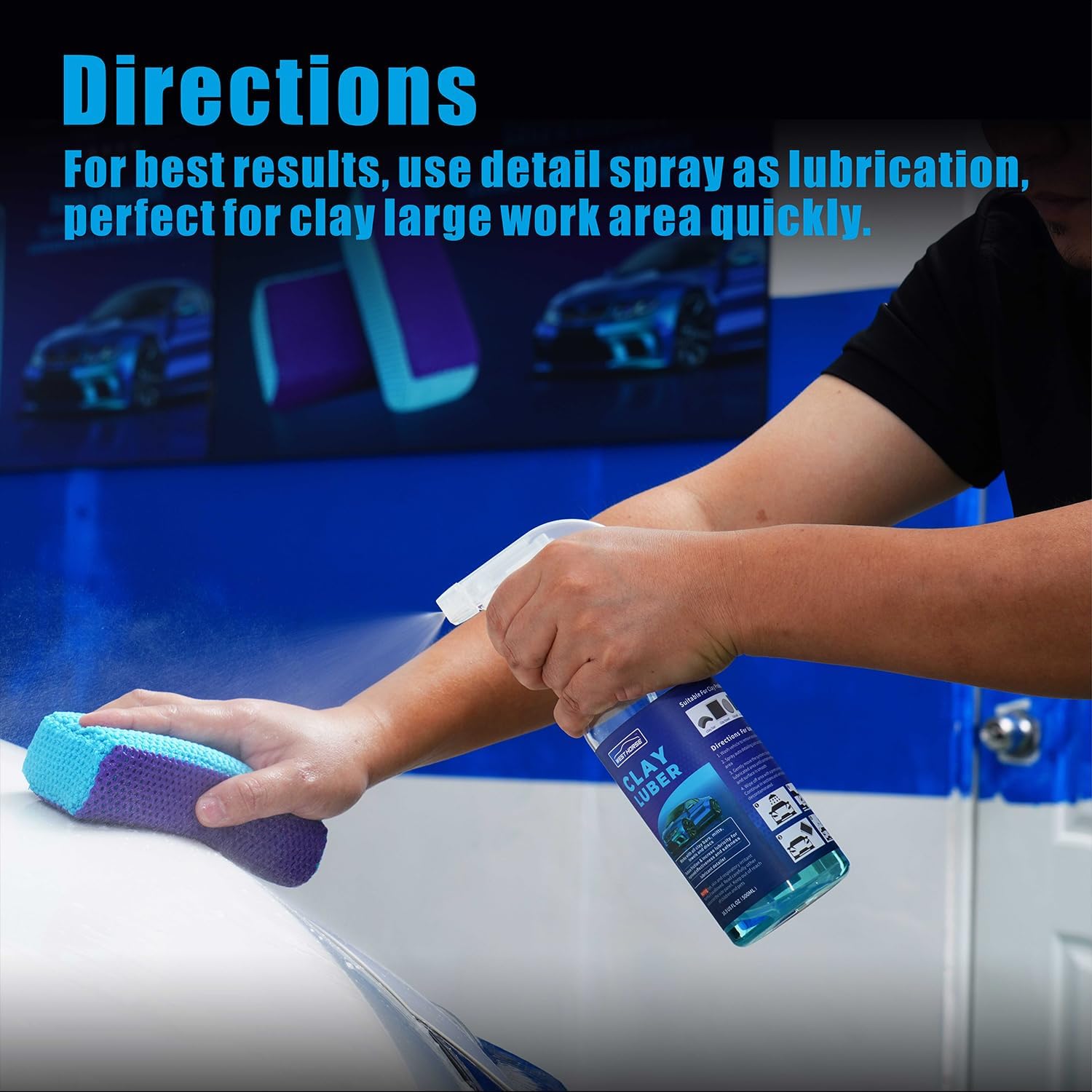
5.Wipe the Surface: Once you have clayed a section of the car, wipe away any excess spray and debris with a clean microfiber towel.
6.Inspect the Surface: After claying a section, run your fingers over the surface to check for smoothness. If you feel any rough spots, repeat the process in that area until the surface is completely smooth.
7.Repeat as Needed: Continue this process around the entire car. Once you’ve finished claying, you can apply a wax or sealant to protect the freshly decontaminated paint.
Not all clay bar detailer sprays are created equal, and the type you choose can affect your results. There are generally two main types:
1.Water-Based Detailer Sprays: These are the most common type of detailer sprays. They provide adequate lubrication and are ideal for light to moderate clay bar treatments. Water-based sprays are easy to clean off and typically have a neutral scent.
2.Silicone-Based Detailer Sprays: These sprays are often used for high-end detailing jobs. Silicone-based sprays offer superior lubrication and can leave a glossy finish that lasts longer. They are more expensive but are favored by professional detailers for their durability and effectiveness.
When selecting a clay bar detailer spray, consider the following factors:
1.Lubrication: Look for a spray that offers excellent lubrication. This will prevent your clay bar from sticking to the surface, reducing the chance of scratching.
2.Protection: Some detailer sprays contain wax or sealant to protect the paint after claying. If you're looking for an all-in-one solution, these may be the best option.
3.Ease of Use: Choose a spray that is easy to apply and doesn’t require excessive rubbing or reapplication.
4.pH Balance: Opt for a pH-balanced product to avoid damaging the paint or leaving behind residue.
5.Price vs. Quality: While some high-end detailer sprays are pricey, there are also many affordable options that provide great results. It’s essential to balance price with the quality and performance that suits your needs.
Clay bar detailer sprays are an essential product for anyone looking to achieve a perfectly smooth and glossy car finish. By facilitating the use of a clay bar, these sprays make the process faster, easier, and safer. Whether you’re a professional detailer or a car enthusiast maintaining your own vehicle, a quality clay bar detailer spray can elevate the results of your detailing routine.
1.Can I use a clay bar without a detailer spray?
It’s not recommended. Using a clay bar without lubrication can lead to scratches and swirl marks. The detailer spray provides the necessary lubrication to ensure a safe and effective process.
2.How often should I use a clay bar on my car?
Typically, clay bar treatments should be done 1–2 times a year, depending on your driving conditions and the level of contamination on the paint.
3.Can I use a clay bar detailer spray on glass or wheels?
Yes, many detailer sprays are safe to use on glass and wheels, though you should always check the product’s label to ensure compatibility.
4.Is there a difference between clay bar detailer sprays and quick detailers?
While both products are used to clean and maintain the car’s surface, clay bar detailer sprays are specifically designed to assist with the claying process, offering more lubrication. Quick detailers, on the other hand, are more for light cleaning and adding shine.
5.Can I use a clay bar without a spray, but with water instead?
You can use water as a makeshift lubricant, but it’s not ideal. A dedicated clay bar detailer spray contains additional ingredients that enhance the lubrication and cleaning process, offering better results.
This detailed exploration of clay bar detailer sprays highlights their importance in the car detailing world, providing the essential lubrication and cleaning action necessary for a successful clay bar treatment. By following the right techniques and choosing the best products, you can achieve a smooth, glossy, and contaminant-free finish on your car.


