A Car High Pressure Cleaning Tool, also known as a tornado or cyclone cleaning gun, is a highly effective tool for auto detailing, particularly for cleaning hard-to-reach areas where traditional tools may struggle. It works by combining high-pressure air with a cleaning solution, which is then dispersed in a cyclone-like motion. This action penetrates deeply into fabric fibers, cracks, and crevices, dislodging dirt and grime that are typically difficult to remove.
Detailed Breakdown of Features, Functions, and Benefits:
1. How It Works:
- The tool connects to an air compressor, which provides the necessary air pressure (typically between 90 and 110 PSI).
- The air passes through the nozzle at high speed, creating a tornado or cyclone effect. This agitation breaks down dirt, dust, and stains.
- A siphon effect draws a cleaning solutionfrom the attached reservoir into the airstream, mixing it with the high-pressure air.
- The cleaning solution is atomized into a fine mist that is blasted onto the surface, lifting dirt without oversaturating it.
2. Types of Surfaces It Can Clean:
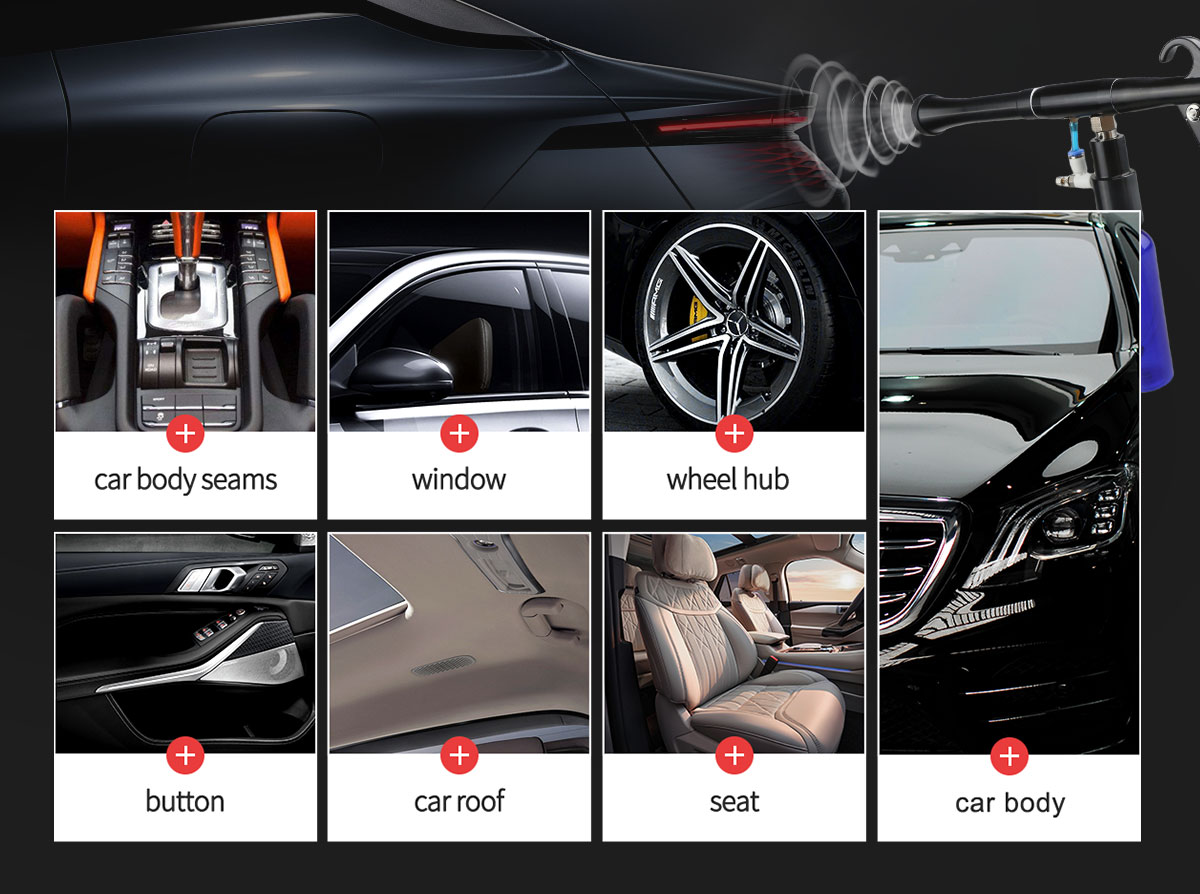
- Car Interior:
- Seats & Upholstery: Penetrates deep into fabric and leather seats, removing embedded dirt, spills, and stains.
- Carpets & Mats: Dislodges dirt and grime stuck deep within the fibers of carpets and floor mats, even in high-traffic areas.
- Dashboard & Door Panels: Reaches into the intricate textures and tight spaces like seams, buttons, and air vents.
- Crevices & Small Gaps: Cleans in-between seat rails, cup holders, and tight gaps where conventional tools can't reach.
- Car Exterior:
- Wheels & Tires: Effectively removes brake dust, grease, and road grime, even from intricate wheel designs and deep tire treads.
- Engine Bay: Safely cleans engine compartments, removing dirt and grease from hoses, wires, and components.
- Grilles & Trims: The high-pressure mist can clean small areas like front grilles and detailed trim without damage.
3. Advantages Over Traditional Cleaning Tools:
- Speed and Efficiency: Cleans faster than traditional brushes or cloths by using high-pressure air and cleaning solution to break up and remove dirt.
- Less Water Usage: Requires less water than traditional cleaning methods since it atomizes the cleaning solution, using it more efficiently.
- Thorough Cleaning: Reaches into small cracks and crevices where other tools can't go, making it ideal for detailed cleaning jobs.
- Adaptability: With adjustable air pressure and interchangeable nozzles, you can control the force and spread of the spray, making it suitable for both gentle and aggressive cleaning tasks.
4. Attachments and Accessories:
- Interchangeable Nozzles: Many models come with multiple nozzles for different cleaning needs. Narrow nozzles for tight areas and wide-angle nozzles for larger surfaces.
- Brush Attachments: Some tools include brushes for scrubbing surfaces while applying the cleaning solution, improving agitation for tougher stains or dirt.
- Detachable Liquid Reservoir: The liquid reservoir can usually hold a few liters of cleaning solution. It’s easily detachable for refilling or cleaning.
5. Key Factors to Consider When Choosing a Car High-Pressure Cleaning Tool:
- Air Compressor Requirements: Make sure the air compressor you use provides sufficient air pressure and volume (typically a minimum of 4.5 to 6 CFM at 90 PSI is recommended).
- Build Quality: Tools made from durable materials like high-quality plastic or metal are preferable for longevity and resistance to wear.
- Pressure Control: Some models come with adjustable pressure settings, which allow for greater control when cleaning delicate surfaces like leather, or for using maximum pressure on tougher jobs like wheel cleaning.
- Portability: Consider the weight and ease of maneuverability, especially if you plan to use the tool for prolonged periods.
6. How to Use the Tool:
- Prepare the Surface: Vacuum the area first to remove loose dirt and debris.
- Dilute the Cleaning Solution: Most tools require a specific dilution ratio of cleaning solution and water. Read the manufacturer's guidelines for the appropriate ratio.
- Connect to Compressor: Attach the tool to a compatible air compressor with a suitable PSI and CFM output.
- Adjust the Pressure: Depending on the surface, adjust the air pressure. Lower pressure for delicate surfaces, higher pressure for durable ones.
- Apply the Solution: Spray the cleaning solution onto the surface. The high-pressure vortex will agitate the dirt.
- Wipe or Vacuum Excess Solution: For interiors, follow up by wiping with a microfiber towel or vacuuming to remove excess moisture and residue.
7. Cleaning Solutions to Use:
- All-Purpose Cleaners: Suitable for general interior cleaning.
- Upholstery and Carpet Cleaners: Formulated for deep-cleaning fabric without damaging it.
- Leather Cleaners: If cleaning leather, use a gentle leather cleaner that won't strip away oils or damage the surface.
- Degreasers: For engine bays and wheels, a stronger degreaser may be used to break down oil, grease, and road grime.
8. Maintenance Tips:
- Clean the Tool After Use: Always flush the tool with clean water after each use to prevent clogs or residue build-up.
- Lubricate Moving Parts: Periodically lubricate the moving parts of the tool to ensure smooth operation.


